drawing a cone 3d tones
Shading is the process of adding value to create the illusion of grade, infinite, and most chiefly - light in a cartoon. When executed correctly, shading can make a drawing announced three dimensional and create a disarming prototype.
When rendering a cartoon that communicates volume, shading is admittedly critical.
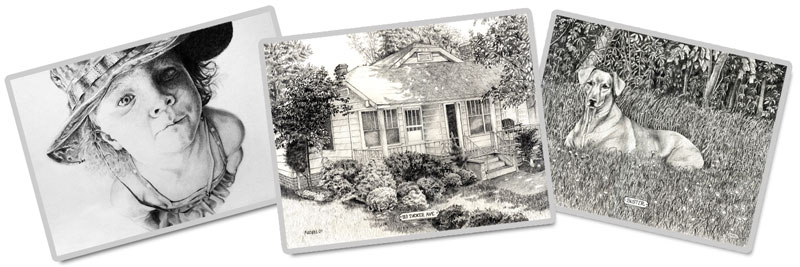
Shading Techniques for Drawing
Techniques used for applying shading to an object are quite varied. Each technique produces a different texture and "feel" to the drawing. The cartoon medium used may make up one's mind the shading technique that is applied in the drawing.
The virtually common application techniques include:
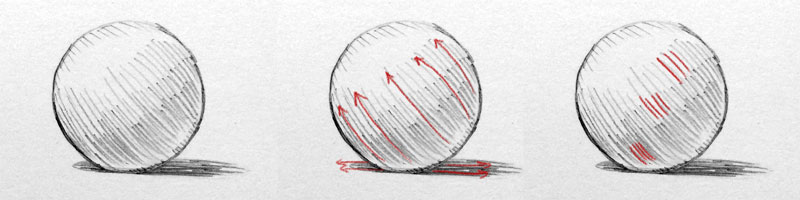
Hatching - Lines drawn in the same management. Past cartoon lines closer together, darker values are created. Leaving more space between lines results in lighter values. For rounded objects, the lines may curve slightly around the form - post-obit the contours of the object.
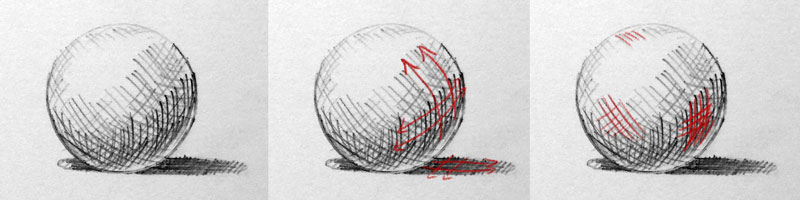
Cross-Hatching - Lines cross over each other. The density at which the lines cantankerous over each other determines the value that is produced.
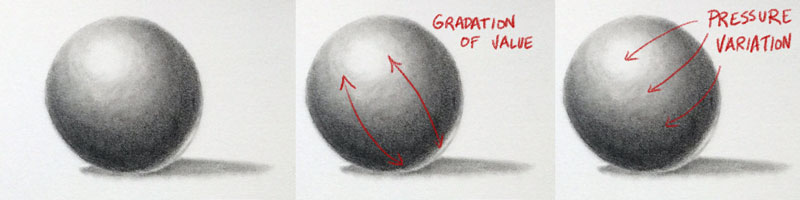
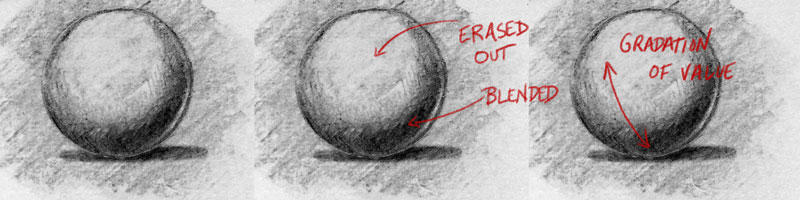
Blending - Smooth gradations of value are produced either by adjusting the amount of pressure practical to the medium or by using a blending tool, such a blending stump.
Rendering - Using an eraser to remove the medium to produce lighter values. This technique is typically used in conjunction with blending.
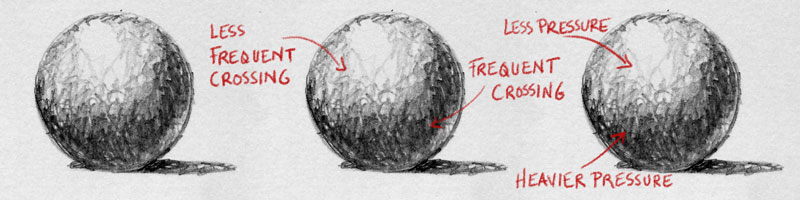
Random lines - Loose applications of crossing lines. The frequency in which the lines cantankerous over each determines the value produced.
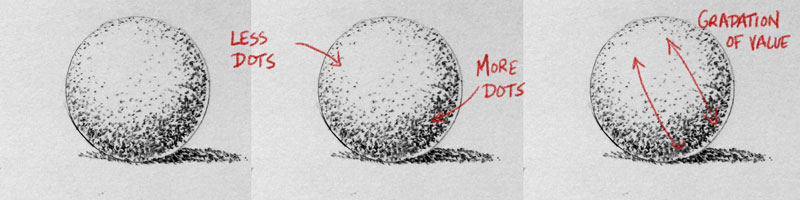
Stippling - Applying countless small-scale dots to build up darker values in a drawing. The density of the dots determines the value produced.
SEE Likewise : How to create smooth shading with graphite
The Illusion of Light
It's piece of cake to get defenseless upward in the technique in which the material is applied and loose sight of the reason why we utilise shading in the beginning place.
Light is how we see, afterward all, and shading informs us of the light within a scene. We sympathise the light inside the scene through the use of value and contrast.

Value is the darkness or lightness of a color. Calorie-free values are called tints and night values are called shades.
Contrast deals with difference. Dissimilarity is produced when whatever difference between elements such as texture, color, size, or value occurs. It can be subtle or extreme. When it comes to shading, we are mostly concerned with the dissimilarity that is produced from changes in value.
When light hits the field of study, it produces a range of contrasting values. The intensity of the light determines the contrast of values. Generally, the stronger the light - the higher the contrast.
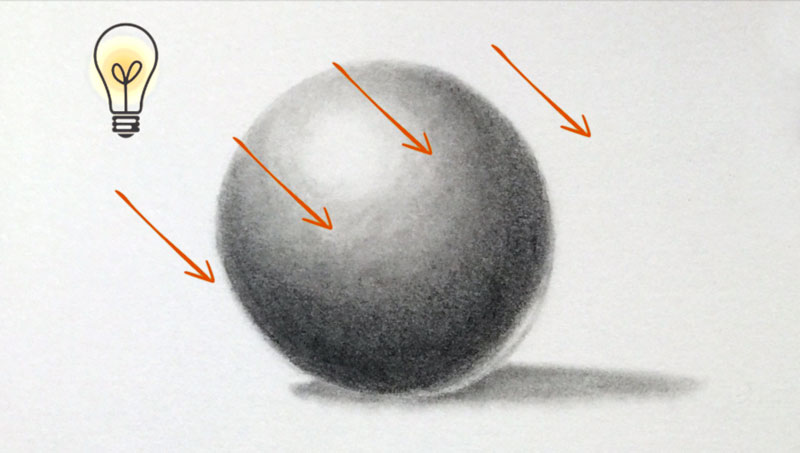
Values are arranged on the subject field according to the location and intensity of the light source (or sources). To simplify the mode in which lite behaves on a discipline and surrounding objects, we'll expect at what happens with but ane light source on a smooth surface.
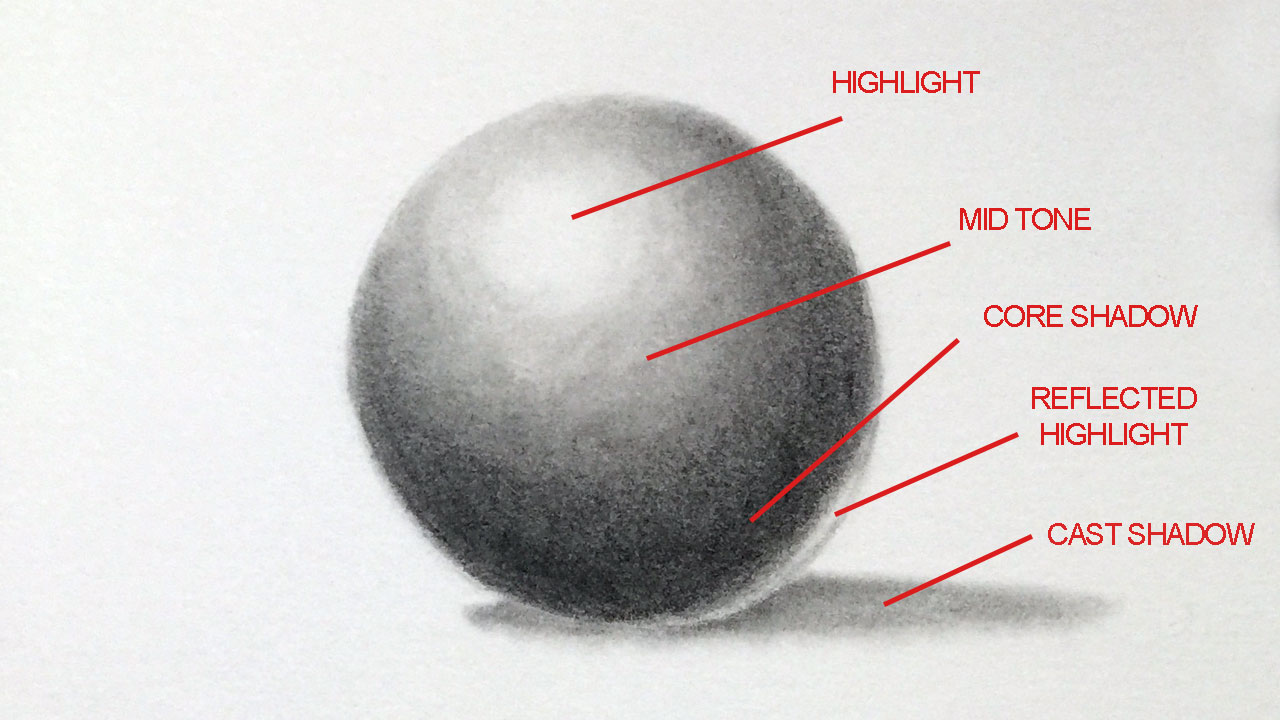
The locations of each area of value on the subject tell the viewer virtually the location of light and how the calorie-free behaves on the bailiwick. The behavior of lite (or how it is reflected) on the bailiwick informs united states about the texture and course of the subject.
Locations of Value:
Highlight - The highlight is the location on the subject where the reflection of calorie-free is nearly intense. Highlights are typically indicated by a very light value of the colour or in some cases - white.
Mid Tone - Mid tones are areas on the subject where some light is hitting, only in a fashion that is less intense than the highlight. In many cases, the mid tone is the actual color (local colour) or value of the subject.
Core Shadow - The core shadow is the area on the field of study where light is prevented from striking, producing an surface area of shadow. Cadre shadows are typically darker values of the local colour.
Cast Shadow - Cast shadows are locations of darker value that result on surrounding objects or surfaces. Light is blocked from reaching these areas completely because another object is reflecting much of the light away.
Some light is reflected back off of surrounding objects and surfaces. This light bounces back onto objects producing an area of lighter value.
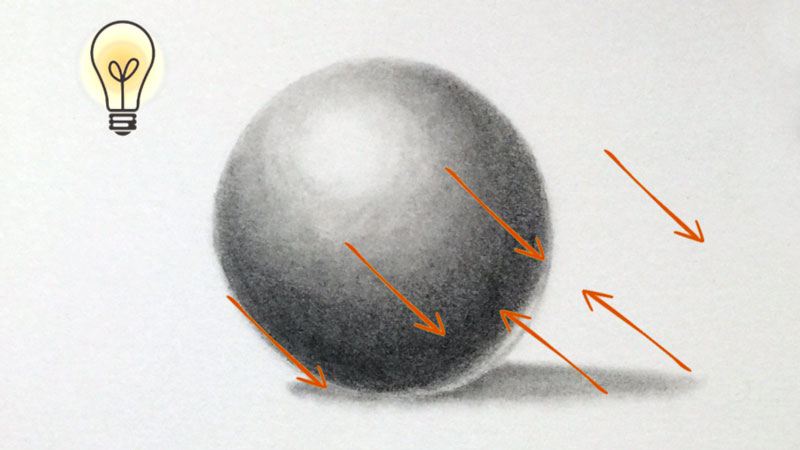
This area of slightly lighter value is referred to equally a reflected highlight.
How to Shade Forms
As mentioned before, shading also informs the viewer of the class of the object. With a sphere, the change in value is gradual (gradation). Value becomes darker or lighter, depending on the lighting conditions. The same is true for other curved forms such every bit cones or cylinders.
For objects with flat sides (i.e. cube), the value stays adequately consistent for each side without much gradation. Each side of the cube may be a different value representing the highlight, mid tone, or core shadow.
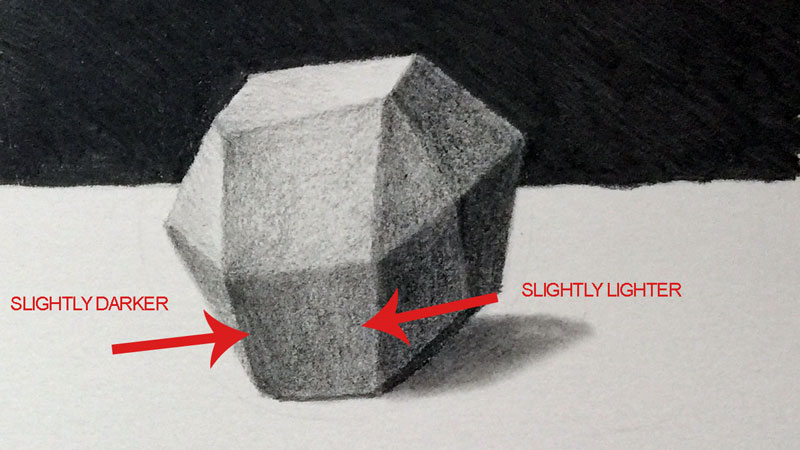
But what about objects that have apartment sides or planes that aren't cubes?
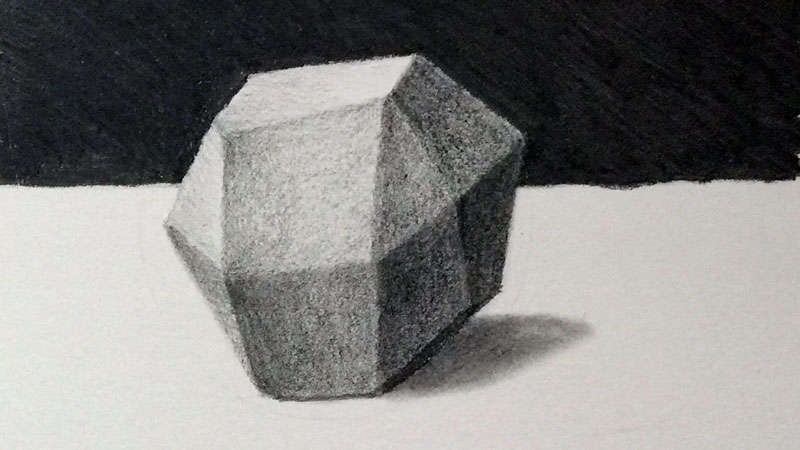
It is these situations where dissimilarity plays an especially important role.
When shading, our goal is to describe the illusion of class and calorie-free. In most situations, this requires calculation a full range of value. By comparing contrasting areas, we can evaluate the value in the drawing and make adjustments equally necessary.
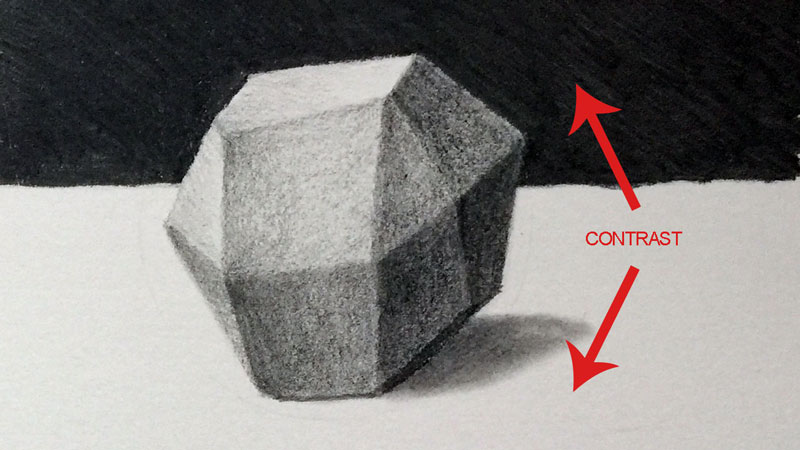
During the drawing process, a dark background is added. Adjustments to the values on the subject are made according to the dissimilarity of values in the background and the table. Comparisons are made and the values are "pushed" in order to create a full range.
We can also exploit contrast to create edges and ascertain the planes of the irregular form. By making the edges of each airplane that are closer to the light source "a touch" lighter, we increase the contrast in value betwixt each airplane.

How to Shade Hollow Forms
Many objects are hollow or have recesses. To address objects such every bit these, we simply consider the direction of lite, thinking of it as a line.
If calorie-free is coming from a certain direction, then it should keep until it hits an object. If the object is hollow, then the light will enter into the recess, producing an area of lighter value inside of information technology. Shadows are created on the reverse side of the edge of the recess, closest to the calorie-free source.
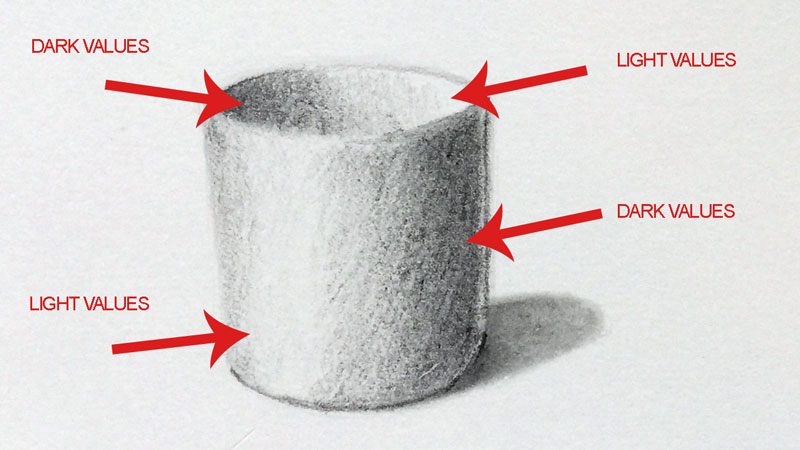
The exterior of the hollow grade is addressed every bit normal, with shadows further from the light source and highlights shut to it.
Controlling the Medium
No matter which medium that you utilize to apply shading, control over the value produced is of paramount importance. The skilful news is that control over the medium simply requires patience and practice.
Once you take a clear understanding of how light behaves and how yous tin communicate information technology to the viewer, then you are already "half-style" there.
Practice drawing a few bones forms - a sphere, cube, and pyramid. Shade them to communicate i light source using a total range of value. (Use contrast to make comparisons).
Once you lot accept mastered these basic forms, motion on to irregular forms and simple yet life objects like apples or bananas. Look for the highlights, mid tones, core shadows, cast shadows, and reflected highlights. The more than that you practise, the stronger you will become!
More Lessons You'll Love...
spurlinemenceapery.blogspot.com
Source: https://thevirtualinstructor.com/shading-techniques-basics.html
0 Response to "drawing a cone 3d tones"
Postar um comentário